History
Est. 1861
Loveland, Colorado
History
Est. 1861
Loveland, Colorado
A Colorado Centennial Farm
The story of Osborn Farm begins, as many American stories do, with a man who had been told he did not have long to live; and who then went out and lived a long, consequential life anyway. To follow it properly, the way the family itself has always told it we have to start a year before the farm existed at all, and then simply move forward, one year at a time, and watch what these people built.


1859–1860: A Schoolteacher in the Gold Fields
William B. Osborn had trained to be a physician in New York State. Before he could finish, a doctor found tuberculosis in him and gave him the standard advice of the age: go west, into the dry mountain air, and buy yourself what time you can. He got as far as Indiana first, where the country seemed healthy enough that he stayed a while and taught school. But the news of gold in the Rockies reached even there, and in 1859 Osborn joined the great westward tide toward the diggings.
He landed in a raw mining camp called Gold Dirt, up in the hills near what would become Central City. He was not a natural prospector he was, by temperament and training, the literate man in a camp of gamblers and the miners quickly put that to use. When disputes broke out, as they constantly did, the camp needed someone to keep the records and render judgment, and they chose Osborn as clerk and judge of their rough miners’ court.
This matters more than it may first appear, because it was in courts exactly like that one that Colorado worked out one of its founding ideas. The bitterest arguments in the camps were over water who had the right to divert a stream, and in what order. Out of those quarrels came the principle that a man could file a claim on water itself, first in time and first in right, measured in units the miners called “inches.” That principle would one day make irrigated farming possible across the entire American West. William Osborn was present at its creation, and he would carry what he learned there down out of the mountains and onto the plains.
By the summer of 1860 the gold was thinning, and Osborn had done the arithmetic. A sick man with a growing family could not raise children in a mining camp, and he stood a better chance selling hay, butter, and vegetables to the miners than digging alongside them. What he needed was land. That season a mustered-out officer named Captain Juan Duro, lately of the New Mexican Volunteers, held a bounty-land warrant earned in service and wanted a fresh stake. The two men came to terms. The warrant changed hands, and with it a claim to 160 acres of open ground along the Big Thompson River country marked, in the absence of any survey, by its two great cottonwood trees and the nearby trading post at Namaqua.
1861: The Arrival
Osborn sent his nephew ahead to hold the land while the family made ready. Then, on New Year’s Day of 1861, a day so mild it seemed a kind of blessing the Osborns came down to the Big Thompson in their wagon, made camp on the banks of the river, and ate their first meal in the valley in the shade of the wagon that had carried them there. That date, the first of January, 1861, is the one the family has kept ever since. It is where the farm begins.
They had chosen well and they had chosen hard ground at once. The country was open and treeless, beautiful and unforgiving, and it lay in the heart of land the Arapaho and the Ute had traveled for generations; north in the spring, south in the fall, with a favored camp in the boxelder grove down by the water. What the Osborns began building that year, they built in the middle of a much older and much larger human story, one whose losses fell heaviest on people whose side of it the family’s own records could only glimpse. That, too, belongs in an honest account of how this place came to be.
The 1860s: Making a Farm Out of Nothing
Everything had to be brought or made. There was no lumberyard, no store, no help but neighbors. Every board and rail and shingle came down out of the foothills behind a straining team of oxen. And yet within a few years the Osborns had raised a cabin remarkable for its time and place; the first log home in the district to have a proper board floor and a shingled roof. On that frontier, a wooden floor was something close to elegance, and the neighbors remarked on it.
Osborn built his herd the hard way, as he did most things. He walked to Denver, bought up worn “dry” cows that had come across the plains yoked to emigrant wagons, and drove them home on foot to the Big Thompson, trip after trip. He put in the first wheat crop ever grown in Larimer County, and the family long insisted the grain came up so thick that a hat tossed onto the field would rest on the heads without falling through.
The life was lived on a narrow margin, and the events that tested it were not the stuff of legend but the stuff of survival. In 1863 a Methodist circuit rider knocked at the door, and out of the meeting that followed (thirteen people gathered in the cabin) grew the first Methodist congregation in the valley. The next year, in 1864, a great flood came down out of the canyons, and the family waded to the safety of the south bluffs through water hub-deep on the wagon wheels. Their most grievous loss in the disaster was two hogs. It sounds like nothing to modern ears. It was very nearly everything, the family’s lard, its cooking grease, the fat for its candles, with no store to replace it and a long season before more could be raised. People who understand that a farm can turn on the loss of two hogs understand the frontier better than any adventure story could teach them.
The 1860s–1890s: Law, Water, and a County Taking Shape
As Larimer County organized itself into being, it turned again and again to the educated man on the Big Thompson. Osborn became the county’s first County Judge. He served as its treasurer and its assessor. He performed the first marriage ceremony in the valley and officiated at its first funeral. He sat on the first city council of Loveland. And remembering what he had seen in the mining camps, he encouraged the building of the early irrigation ditches, helping his neighbors survey grade with nothing more sophisticated than a walking plow turning a single furrow to follow the fall of the land. Much of the water that still makes the country green runs along lines those men first traced by hand.
The physician who had been sent west to die instead lived into his nineties; long enough to see the valley he had helped found fill in with farms, churches, roads, and schools, a good many of which he had a hand in. It is a fine thing to remember that the man was, at bottom, a builder, and that nearly everything he touched outlasted him.
1877–1960: The Generations Carry It Forward
What happened next is the part that lifts this from a good pioneer story into something rarer. Most family land does not stay in the family. It is sold, divided, forgotten; the name moves on. The Osborns did not let go.
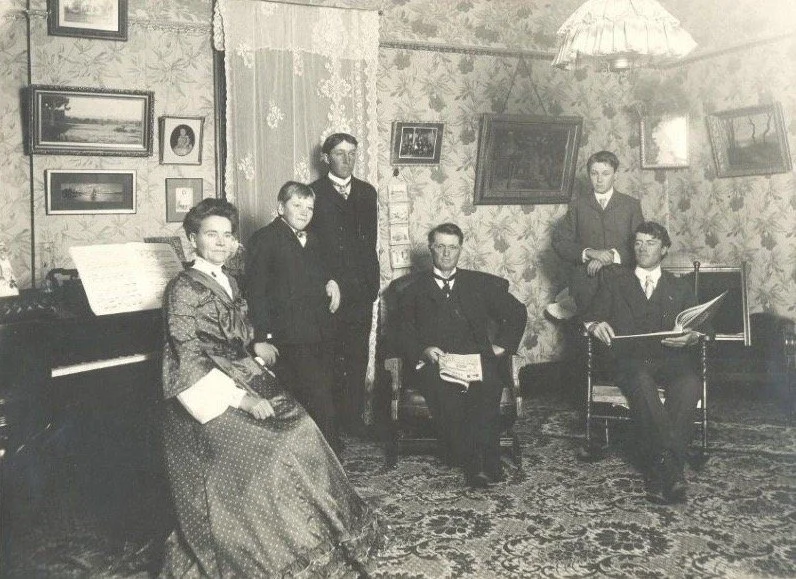
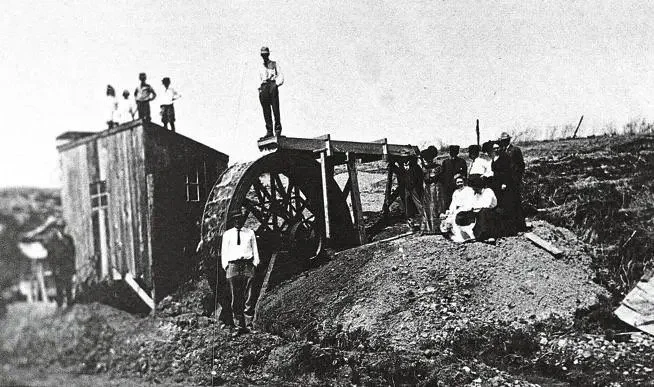
William’s son, Milo Y. Osborn, took up the farm and worked it while ranging widely; he ran the first corn sheller in the county, a steam-powered machine old-timers still spoke of decades later; he homesteaded up in the mountains at Box Prairie; and he packed trout by horseback into a set of high alpine lakes to stock them. In the next generation, Kenneth Osborn proved to be an inventor of real gifts, rigging a waterwheel to bring electric light to the farmhouse before rural electrification had reached the countryside, and earning a patent for an automatic irrigation headgate. Nor was the family’s distinction only in the fields: Louise Frazer Osborn was regarded as the finest musician in Northern Colorado, and her piano was loaded onto a hayrack and hauled into town whenever the community had need of music.
And then, near the end of this long line, an old man named Clarence Frazer Osborn (born on the farm in 1877, and by 1960 nearly blind) sat down and dictated the whole history aloud, day after day, so that his grandchildren, growing up amid television and automobiles and airplanes, would know where they had come from. A great deal of what can be told about this farm survives only because one man refused to let it be lost. We owe him the story.
1986: A Century Made Official
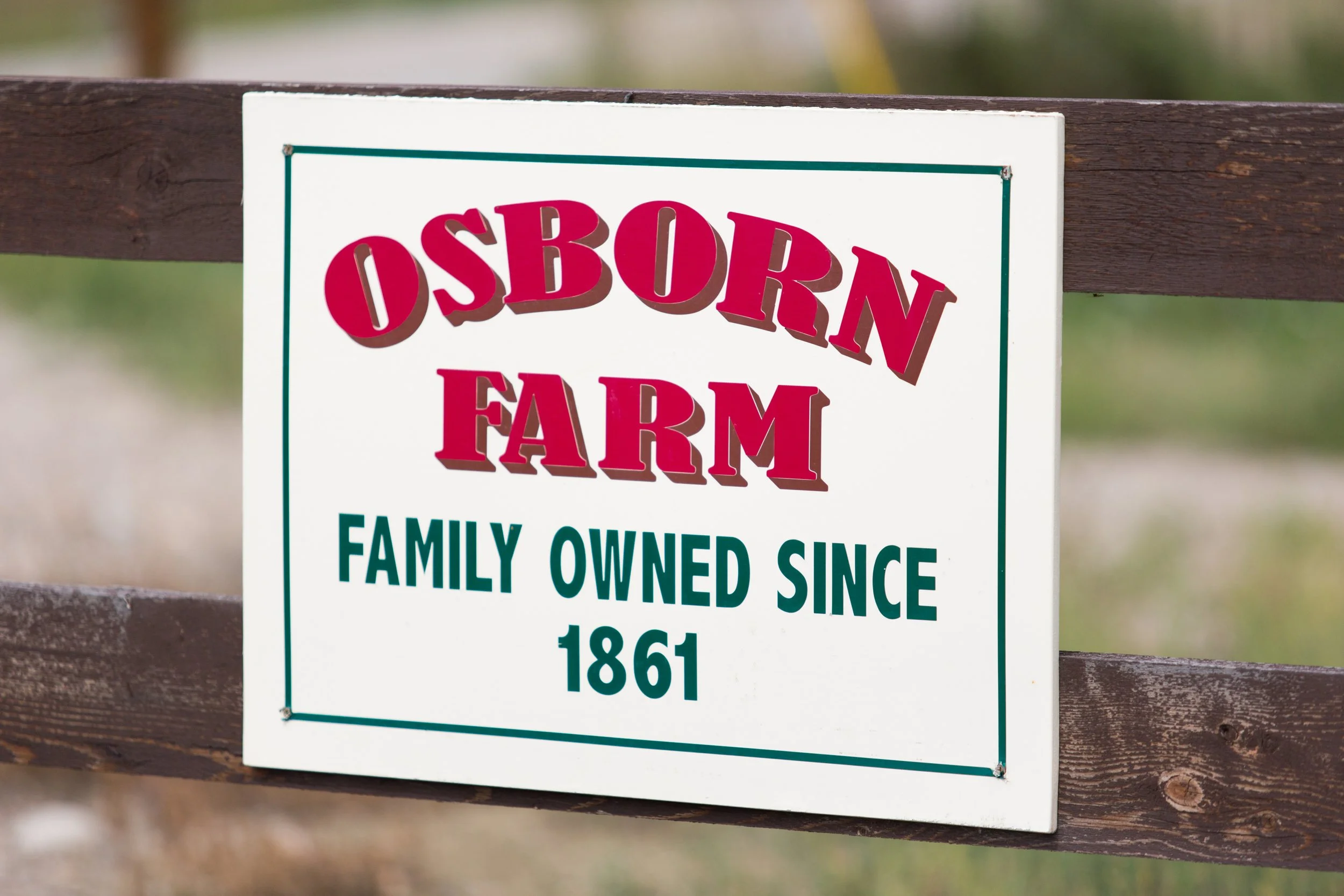
By the middle of the twentieth century the land had passed down to Milo A. Osborn and his family, still in wheat and hay and corn, still in the same name. And in 1986 the State of Colorado made formal what the family had quietly accomplished: Osborn Farm was designated a Colorado Centennial Farm, an honor reserved for land held by one family, without a break, for more than a hundred years. The family will tell you it is the oldest continuously occupied farm in the state; a claim seven generations have earned the standing to make. Whatever the final reckoning, few places in Colorado can answer it.
1980–Today: The Pumpkins, and What Endures
The most recent chapter began, fittingly, almost by accident. Around 1980, Pam Osborn grew a few pumpkins to amuse the children in a neighborhood babysitting arrangement, found herself with a bumper crop, and set the extras out by the road for free. People kept leaving money under them anyway. It was the same instinct William had shown with his hay wagons more than a century before; make something useful of what the land will give, only now it was aimed at October.
From that beginning grew the tradition that a great many Northern Colorado families now measure their autumns by. Today Pam and Dale Osborn, with their sons and their families lending hands on the weekends, open the farm each fall for pick-your-own pumpkins and again in December for Christmas trees. There are antique grain scales to weigh what you carry out, wheelbarrows that never last the morning, long views to the mountains, and a back stretch of the property that remains, as one of the Osborns has said, genuinely wild; with the Big Thompson River running the same northern line it ran when a wagon first made camp on its banks in 1861.
That is the thing worth pausing over. Between that warm New Year’s Day and this one, the country endured a civil war and reinvented itself many times over; ox gave way to steam, and steam to engines, and engines to satellites overhead. And through all of it, in view of the same mountains, there have been Osborns on this ground. Seven generations is not a slogan. It is a long, unbroken act of stewardship, and it is still going on.
Come and stand where it started. You will be welcome, as travelers have been on this land for a very long time.
A note on sources:
This history draws on the Memoirs of Clarence Frazer Osborn (dictated 1960–61, arranged by Robert M. Osborn) the family’s own account of its first generations on the Big Thompson; on History Colorado’s Centennial Farms & Ranches record for Osborn Farms (founded 1861, designated 1986); on Ansel Watrous’s History of Larimer County; and on local reporting about the present-day farm.
Furthermore, the account rests on family memory and oral tradition. Anecdotal stories assembled from those vingnettes recounted at dinner tables and holiday gatherings such as the deal struck at Gold Dirt and the hat resting atop the wheat. These parts have been captured as the Osborns have always told it.
We encourage you Visit and Support organizations whose missions are to capture the extraordinary lives of normal people and to join us as we continue to piece our story together for ourselves and you.
Fort Collins History Connection
First United Methodist Church, Loveland Colorado
W.B. Osborn Mentions: Colorado Historic Newspaper
Milo Y. Osborn Mentions: Colorado Historic Newspaper
Clarence Osborn: Colorado Historic Newspaper
Llewellyn C. Osborn: Colorado Historic Newspaper